
On Artists Statements
The most simple yet most difficult thing
Part of being an artist is writing about your work for exhibitions or grants, but that doesn’t make it easy. I can remember stumbling through some of my first artist statements when applying to grad school. I felt clumsy, awkward, like a puppy with paws too big for it’s body. As someone who was an avid reader growing up writing didn’t come naturally to me. I practiced a lot to get better. Taking advantage of the writing center at Columbia helped me work on the craft of artist statements and I wanted to revisit a few here to see (cringe) what’s changed and what I learned since that first attempt. These have been edited for brevity and with my notes of what I can remember at the time. This post may get cut off in some instances.
This first artists statement draft I wrote for graduate school and I had no idea what I was saying. I wrote to a friend to ask for some editing, he was a curator and had gone to Columbia which was where I was dreaming of going. He edited the text within fifteen minutes and I realized that I needed much, much, more work on my statement to be considered ready for graduate school.
First draft pre-application, 2009
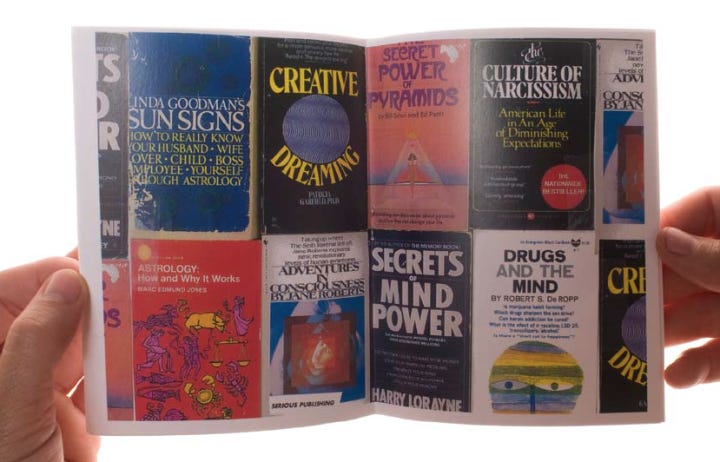
In my previous work I was concerned with image making as a means towards a pure expression. I feel that my previous work was more craft based. Although I always had clear ideas about the craft, the reasoning for making it was less straightforward. The mediums I have worked in are abstract drawing, and bookmaking. Within these two mediums I have made several series of in-progress works. Some books have included an ongoing series of found book covers altered to change the context of their original meaning. Another is a series on duality, re-envisioning the same photographic image or drawing and comparing them. Also a series of self-portraits are found in each book documenting my changing self.
Currently I have been rethinking my artistic practice with much more vigor. I have been thinking about interpreting my own ideas about self-portraiture, specifically, utilizing the artist book as self-portrait.
I have begun new research into art history and have become particularly inspired by the conceptual work of the 1960s. I can see the influence of this work evolving in the way that I think about my work. I feel that I am progressing their ideas.
I am active in the publishing community; I self-publish and sell my books at specialty book stores like Printed Matter and Art Metropole. I would like to keep a focus on new ways of distributing the work whether it be the internet, mailings, exhibition or performance.
Next when I had written and re-written and re-written I was finally ready to apply to grad school. It was a moment in my life when I needed a change. I was working full-time as a designer at a TV station in midtown (yet I didn’t really watch TV) and I would leave every day at exactly 5pm on the dot to go and make my art. I would come in to the office on the weekends to use the photocopier. Sometimes on my breaks I read artist biographies in my tiny cubicle that was far away from a window.
Refined for graduate school application, 2009
Through my work I am examining an unfolding narrative of my own life in the media of books, prints, sculpture and video. My methods include narrative, coded autobiographies, full disclosure and personal mythologies.
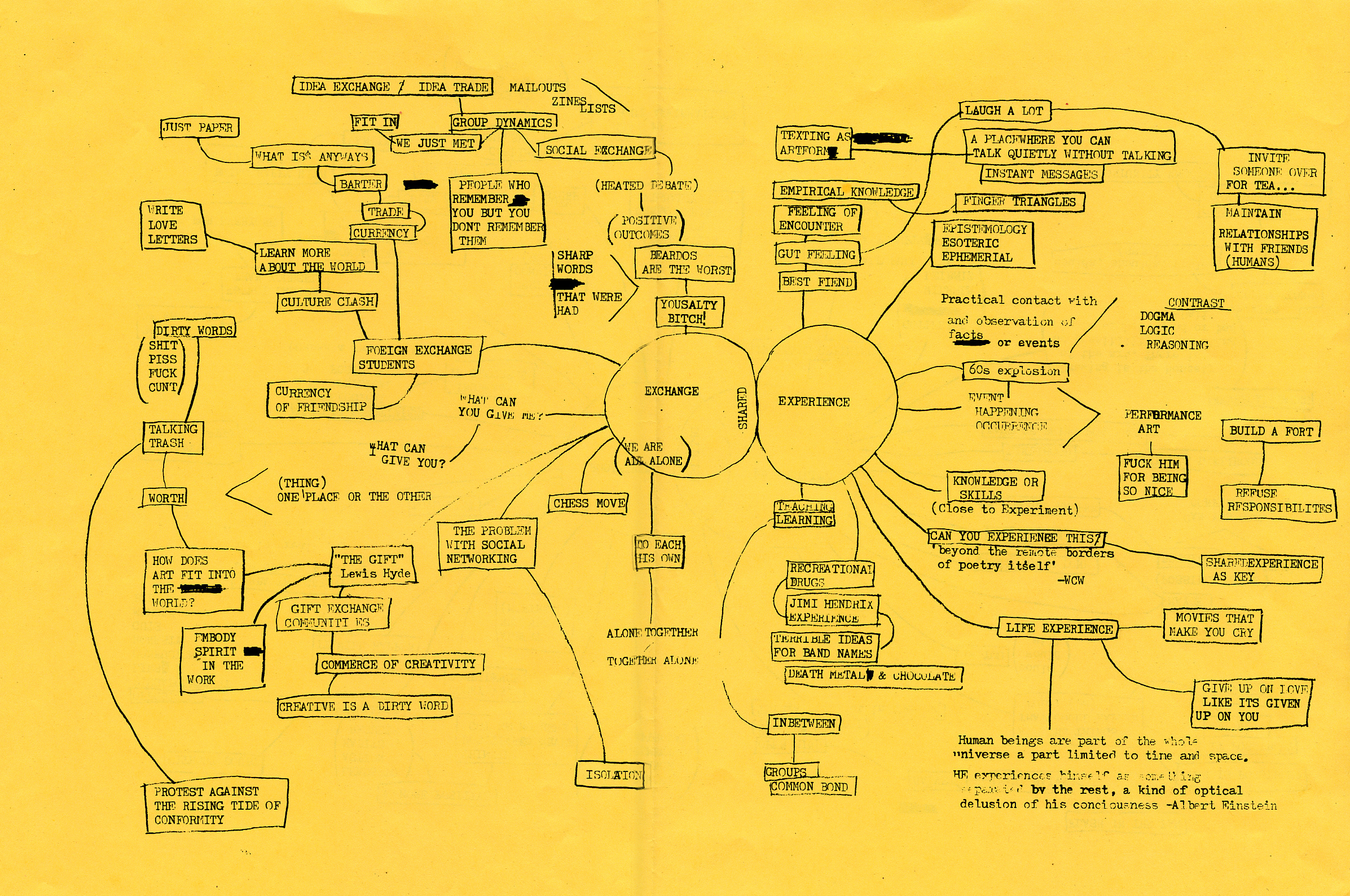
My recent artist's book, Mind Maps, deals with the motivation behind art making. Mind Maps are elaborately constructed diagrams, rendered on a typewriter and connected with pencil lines. At the core, themes like Destiny, Fate, Art and Life overlap and branch out into compositions that shift context from broad generalization to the tangible. With this approach I am able to make sense of my own thought process.
Spitting into the Wind is a offset lithography poster that investigates the effect of Duchamp's infamous Fountain. Exploring the imagery created by Bruce Nauman that bears the same name, as well as song lyrics from Jim Croce's You Don't Mess Around with Jim the poster is a contemporary mix of references. The image a grotesque yet beautiful pause in space and time reflects on the notion of going with your own instincts even if it hits you in the face.
I am interested in the work of Romantic Conceptualists, and the extent to which conceptual art, or any art object, can carry emotion. It's important for me that the hand of the author is made visible. The experience of exchange with another person is also pertinent to me, in a sense the exchange of a community at large. Specifically strengthening my understanding of art history to be able to interpret that history in my own way, utilizing new feminism and also the history of artist's books.
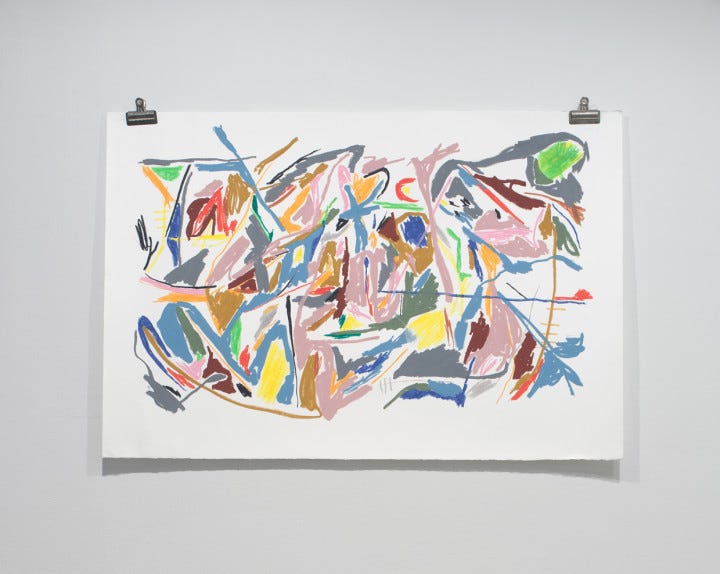
After I got into Columbia I really dissected my practice. It was breaking things down to building them back up again in group critiques and studio visits. I felt like I was really coming into my own language and using materials and processes that were exciting to me.
Early post grad school, 2012
My work in books, prints, and sculpture examines the unfolding narrative of my life in coded biographies, full disclosures, and personal mythologies. Four recent projects along these lines are The Book that Makes Itself, Mind Maps, The Story, and Spitting Into the Wind.
The book Mind Maps (2009) deals with the motivation behind art-making through elaborately constructed diagrams rendered on a typewriter and connected with pencil lines along themes such as Destiny and Fate, Positivity and Possibility, Art and Life.
Spitting into the Wind (2009) is an offset lithography poster that investigates the effect of Marcel Duchamp's infamous Fountain with references to the work of the same name by Bruce Nauman and lyrics from Jim Croce's You Don't Mess Around with Jim. Grotesque, yet beautiful, the image is a pause in space and time that inspires going with your instincts even if it hits you in the face.
Finally The Book that Makes Itself (2010), touches on ideas of continual documentation and production, education, artistic practice and self-inquiry. The Book itself is personified within an ongoing narrative that reads as a three act play; it exposes its own production through content and form and engages in a dialogue with me as its subject, agent and author.
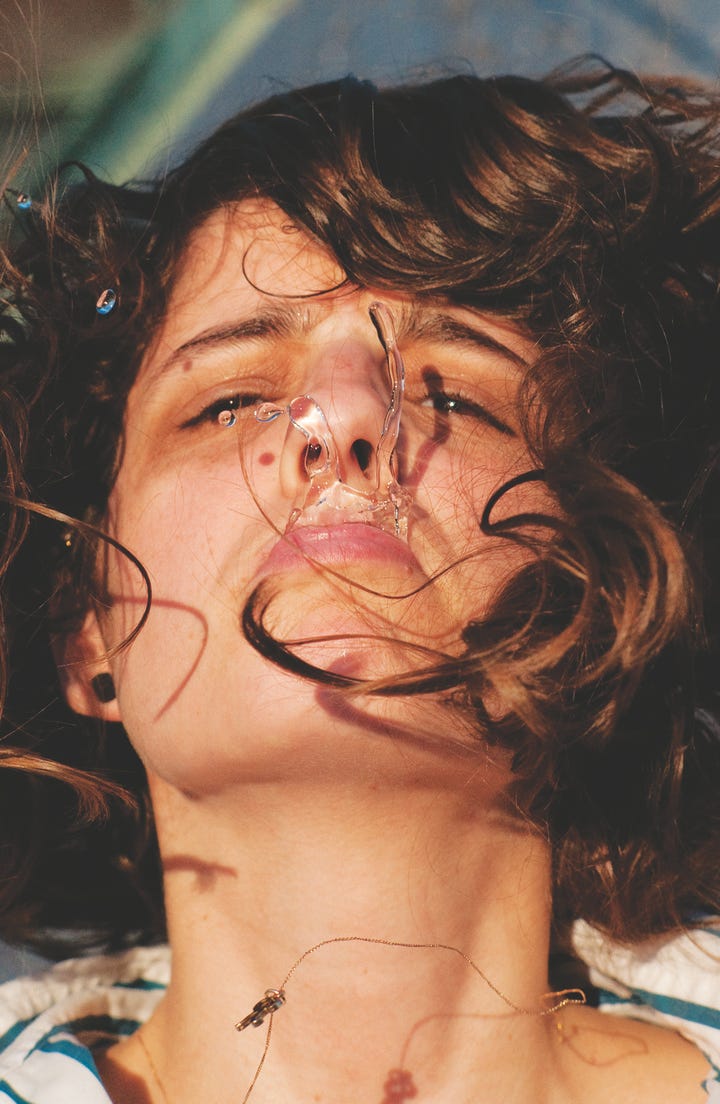
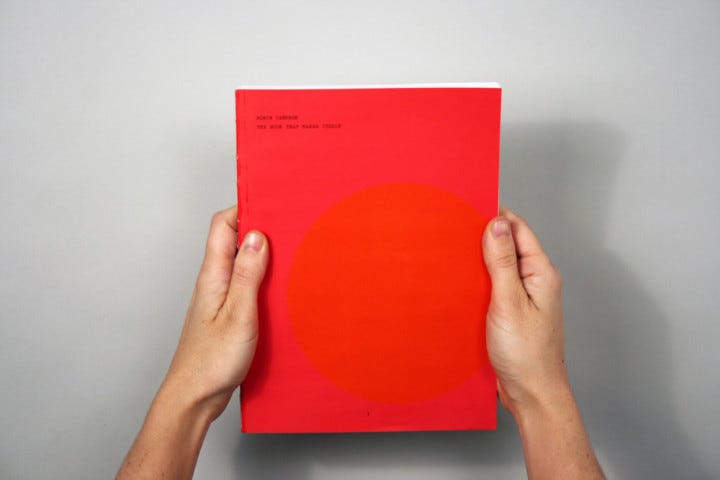
Coming out of grad school and having my first solo shows was a huge deal for me. It was exciting to be involved with a small gallery and being able to argue and think about art in a broader community than my closest grad school peers. I remember running around the Lower East Side during openings to four or five different galleries and seeing friends and acquaintances on the street in passing, the energy then was contagious, I felt lucky to live nearby.
Late post grad school, 2012
My practice examines concepts of truth, process and language. I use writing in conjunction with sculpture, prints and drawings. I have created many books and zines that examine moments in my life to construct a personal mythology.
For the exhibitions P-R-O-C-E-S-S-E-S (2012) and T-R-U-T-H (2011) the book has been expanded into an exhibition space. Letterpress book pages give meaning, while connecting the various media in the show. From Hoaxes to philosophy, short stories to subway stops, from mathematical algorithms to literary references all these come together in an open-ended dialogue.
In terms of historical precedents I am interested in the work of Romantic Conceptualists, and the extent to which conceptual art, or any art object, can carry emotion. The experience of exchange with another person is also pertinent to me, in a sense the exchange of a community at large.
This was when I felt like I hit my stride I started by telling my story and what had influenced me when I was first beginning to make art. Then I was able to remove some of the parts of the statement that weren’t working like ‘Romantic Conceptualists’ and drill down to the big themes. Since I work more on a project-basis creating small paragraphs that explain the concepts was more straightforward then broad sweeping statements.
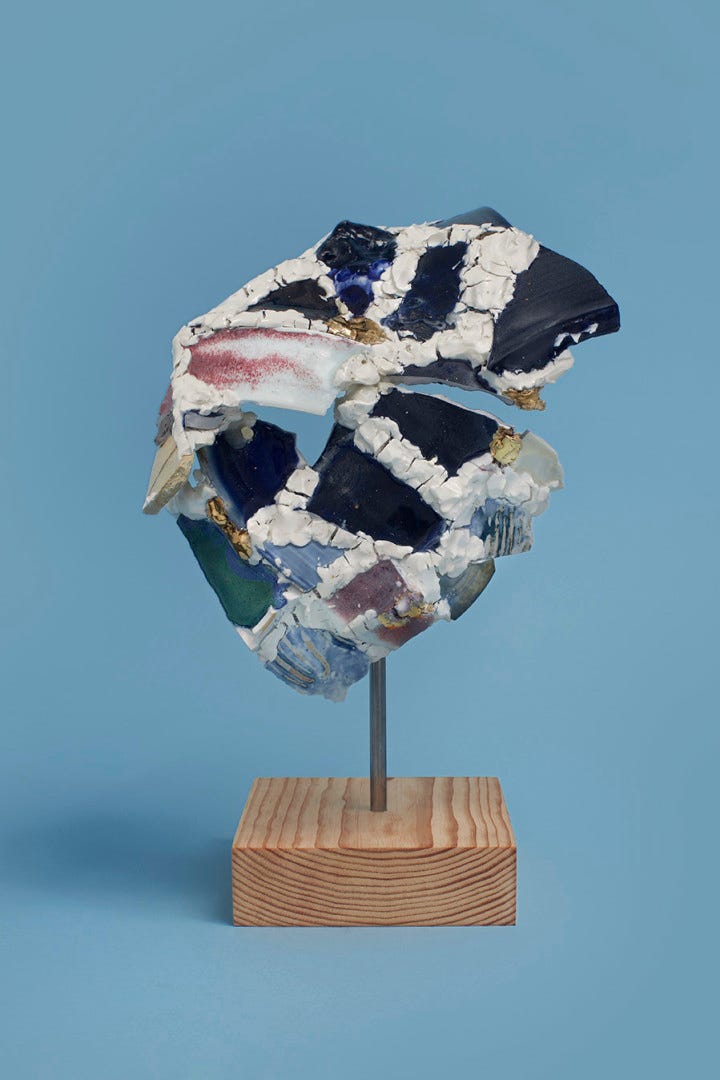
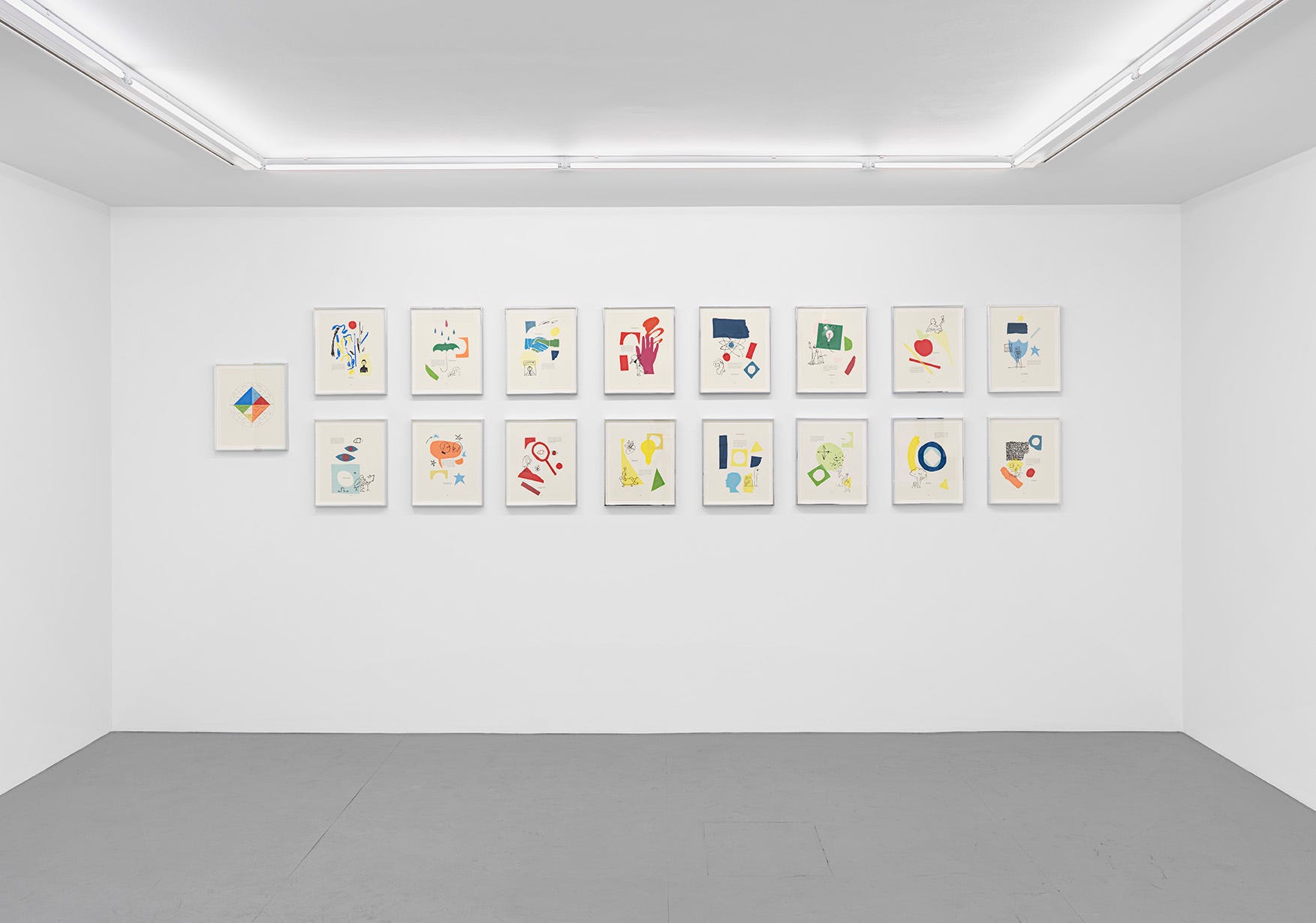
Ceramics, time & chine-collé, 2017
Moving to New York, there were few spaces to show as an emerging artist, and I gravitated to the bookstore Printed Matter as a place to interact with artists, producing books and finding a community. I saw books as a way to showcase my work and disseminate ideas instead of having an exhibition. My practice grew to be multidisciplinary, now I work in ceramics, brass sculptures, cyanotypes and printmaking.
For each new body of work, I create an artists’ book that contains ideas not held in the works themselves. I use autobiography and fragments of materials, text and imagery to create meaning. I see my work as combining both form that is anchored in Modernism while building on the Conceptual Art strategies of language and ideas. In my practice I often use traditional media in an unconventional way to explore the boundaries of time, systems of thought, and identity.
Une Seconde Vie is a series of ceramics sculptures made from re-firing discarded ceramic shards into anthropomorphized shapes, such as masks, a ribcage or a full skeleton. The works are influenced by kintsugi —the Japanese art of mending broken pottery as well as Henri Matisse, whose burst of creativity after his diagnosis of cancer inspired the series title, Une Seconde Vie. These works directly echo the concept of ‘productive failure’ by making use of other artist’s shards found in the trash. I utilize traditional display mechanisms like metal armature and wooden bases.
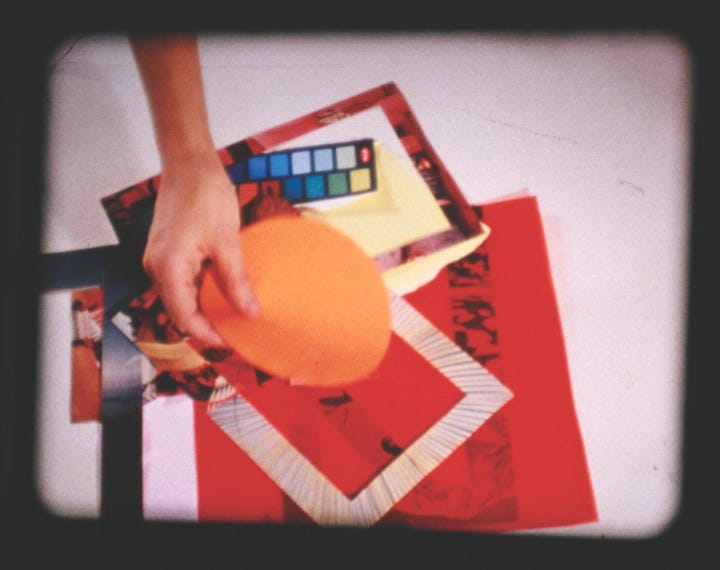
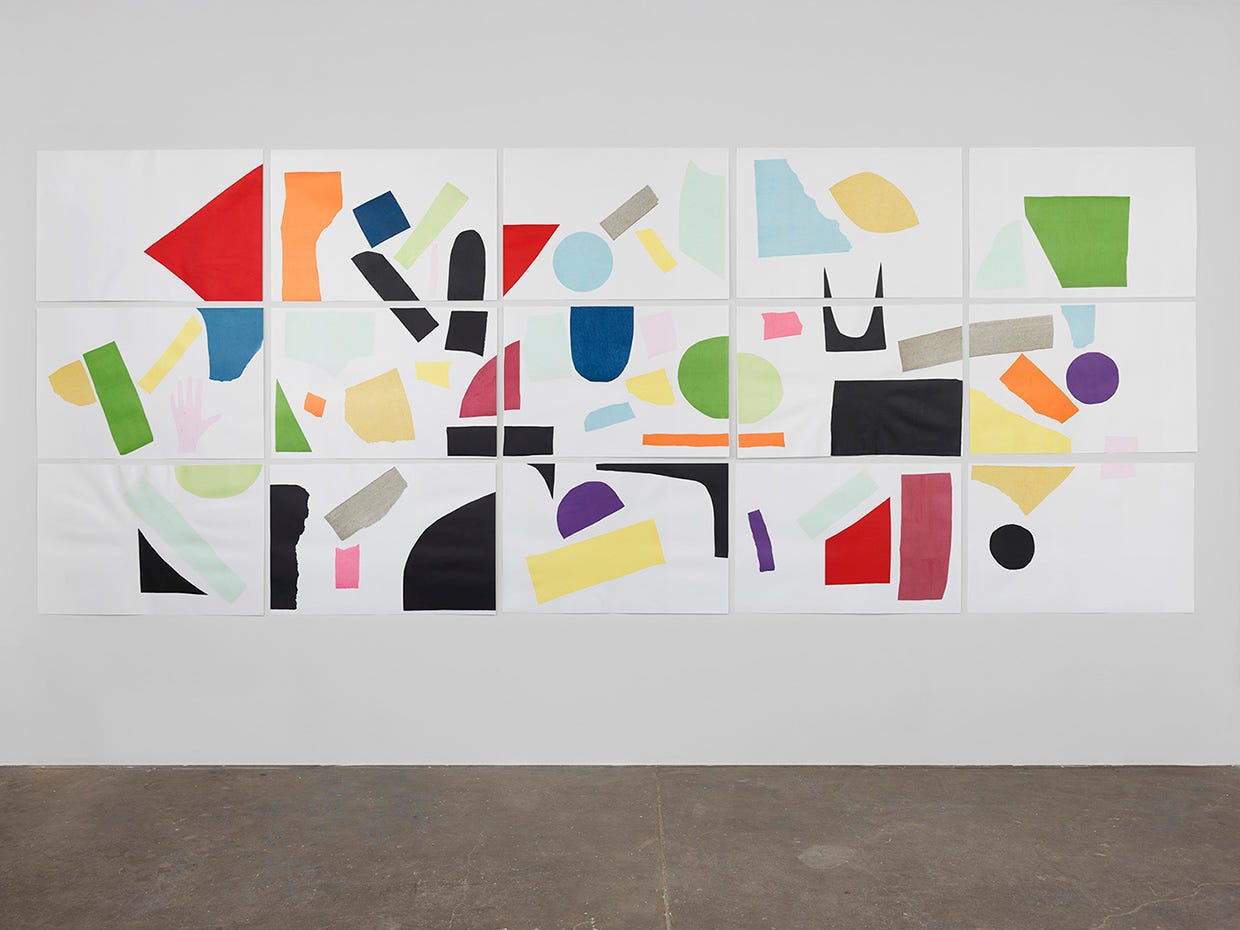
Movement III is a large-scale, abstract multi-part chine-collé print, with fifteen paper panels. Titled Movement, the works function as abstract visions of music, gesture or compositions. Formally the works pay homage to Henri Matisse’s cut-outs, The Bauhaus’ modern aesthetic, and Paul Rand’s book cover collages. Developing a technique of using Japanese gampi paper and a white backing sheet, the colorful paper fragments appear to be fused on the surface. Typically combined with etching my process employs the chine-collé on its own.
Most recently I’ve been focused on the theme of ‘Time’. The work in this series that I’ve developed in the last few years includes: sculptures in homage to Fausto Melotti, brass sculptures of measurements such as: 7, 365, 24, When is it? a slide projector work that functions as a clock, a short film Near Future, Recent Past that attempts to explain time and book of 365 stories entitled Right Now.
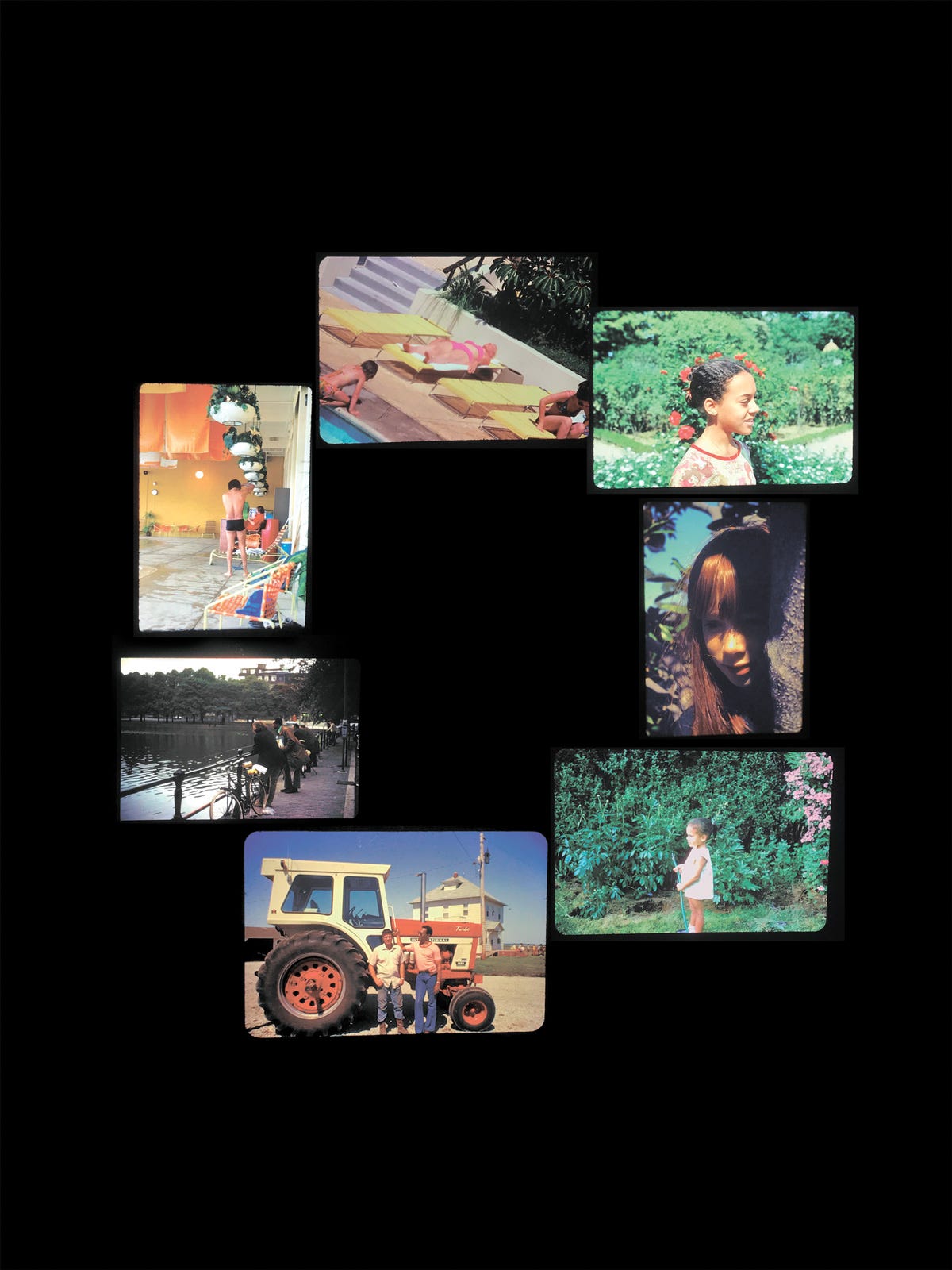
From the last five years it’s been refinement and adding or removing whatever current project I’ve been working on or am trying to talk about in an application. Typically I’ll write something for that year and then adjust it to whatever the application calls for. I think the one part of my work that I struggle with is to distill it all down to a few paragraphs, or one single series since I work across multiple mediums and with various concepts for each project. I feel like my work carries themes and aesthetics but a jury is not always have the time to look at the work closely.
Identity, second solo show, 2020
The idea comes first, for me, and then the form that the idea will take. Historically in conceptual work beauty is typically absent, eschewing form for ideas. There is a fragmentary nature to the way I construct my artwork, these parts come together to create works, that are both conceptual and beautiful at the same time. The works in my practice are a mix of media, from ceramic and brass sculpture, to cyanotypes and printmaking.
“Who You” is from my second solo show at Room East in 2014, the overarching theme of the show was Identity. The show featured a set of chine colle, letterpress and silkscreen prints entitled Everyone is Everyone, based on the Myers-Briggs personality test. This test was originally created by a mother and daughter, based on Carl Jung’s writings, the test allowed women to find placement in jobs after the war. In the foreground are two face sculptures made from brass that allude to Picasso’s disjointed portraits.
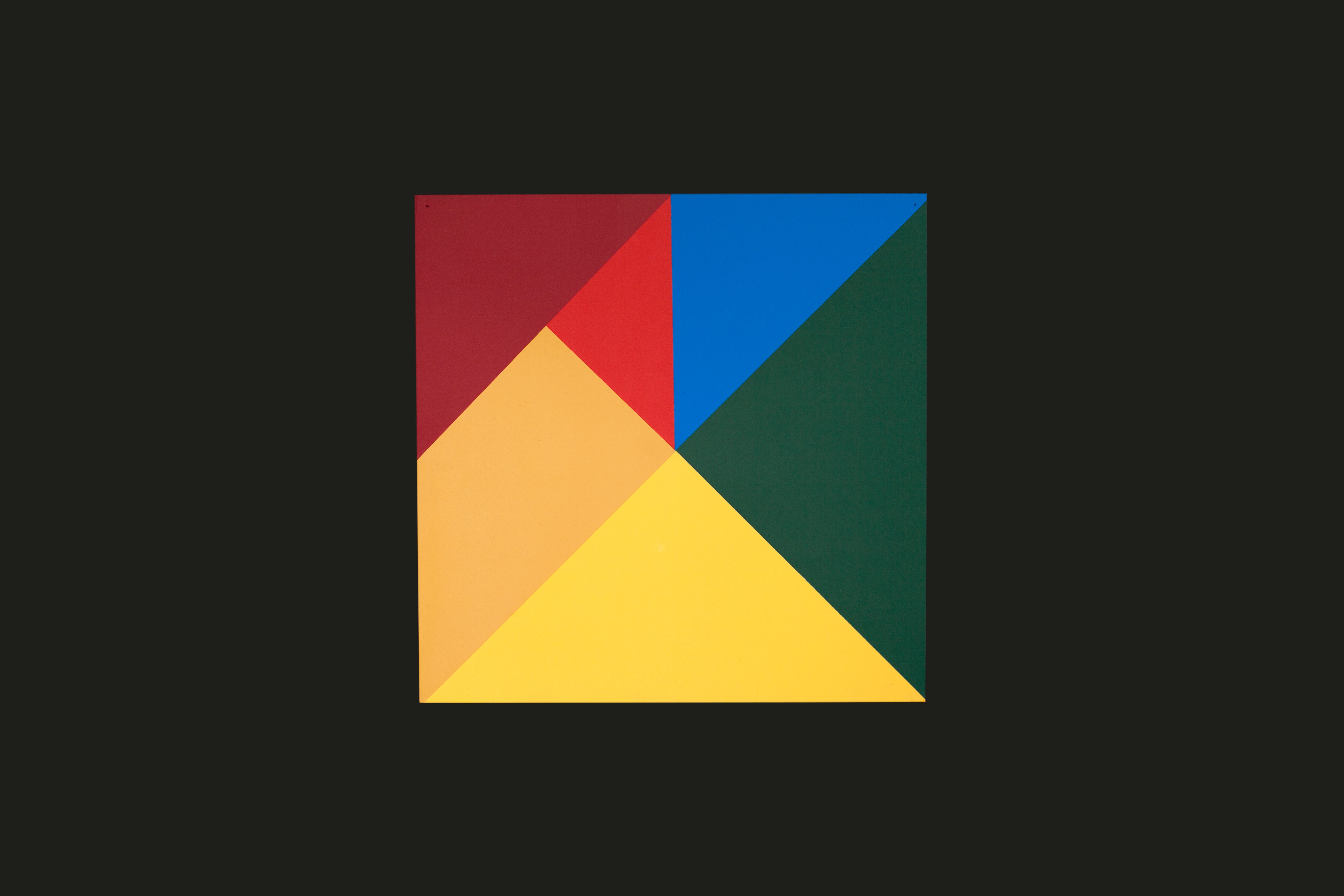
Continuing to refine my introductory paragraph, and it’s probably time to re-write my statement to be current for this year. Sometimes like for my Calendar Oeuvre I will write a statement for a PDF that I was sending out to explain the project and then that can fold back in on the artists statement.
Most recent statement, x2023
Moving to New York, in 2004 there were few spaces to show as an emerging artist, and I gravitated to the bookstore Printed Matter as a place to interact with artists, producing books and finding a community. I saw books as a way to showcase my work and disseminate ideas instead of having an exhibition. My practice grew to be multidisciplinary, now I work in ceramics, brass sculptures, cyanotypes and printmaking.
The most ambitious work that completed this series on time was Calendar Oeuvre (2019). A large scale installation, comprised of 365 individual steel panels affixed to the wall, divided into twelve months, each month a metaphor for the concept of time, including iconography and symbols of moons, numbers, star patterns and cloud formations. ‘Calendar Oeuvre’ takes cues from Jennifer Bartlett’s seminal work ‘Rhapsody’, 1975 that consisted of 987 individual panels that builds on the history of painting. The difference being that my surfaces will take on strategies of printmaking, utilizing silkscreen, cyanotype, image-transfer, electrolytic etching and mono-printing.
These are some good articles that I sent to students when I was teaching, or referenced myself when working on my artist statements. It’s so easy to fall into the trap of flowery language and nonsense instead of being clear and concise. I hope seeing my process was insightful.
Nyland Blake on Artists statements
“Don’t Quote Deleuze” by Artspace Magazine